Referee Patterns Altering Prop Markets in Midweek Soccer Leagues and Evening Fixtures
Alex Beck · Jul 11, 2026
Referee Patterns Altering Prop Markets in Midweek Soccer Leagues and Evening Fixtures
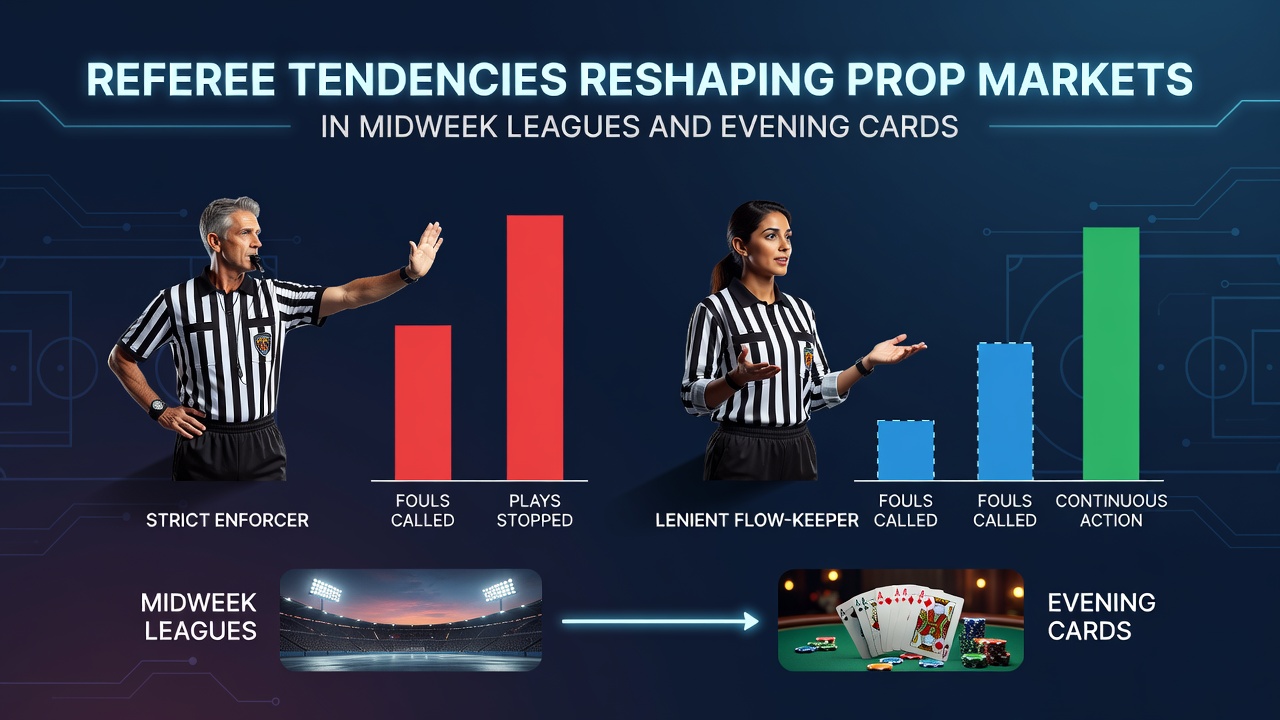
Referee tendencies have started to influence prop markets in midweek soccer leagues and evening fixtures more noticeably since early 2026, with data from various competitions highlighting consistent variations in card issuance, foul counts, and penalty decisions. Observers note that these patterns emerge particularly in lower-profile matches where fixture congestion and player fatigue intersect with individual referee styles, creating measurable shifts in betting lines for bookings and related props.
Midweek League Contexts and Referee Assignments
Midweek rounds in domestic leagues often feature referees who handle multiple games within short periods, and analysts track how their historical card rates adjust when fatigue sets in among players. Data indicates that certain officials average 4.8 yellow cards per game in these slots compared to 3.9 in weekend fixtures, according to aggregated league statistics compiled through July 2026. This difference stems partly from tighter schedules that leave teams with rotated squads, leading to more physical challenges that trigger bookings under stricter enforcement.
Those who study referee performance point out that evening midweek cards frequently involve officials known for higher foul thresholds in the opening 20 minutes, yet they tighten criteria after halftime. Such tendencies reshape over/under markets on total cards because bettors adjust lines upward when specific names appear on the appointment list, while unders gain traction with more lenient arbiters.
Evening Fixture Dynamics and Card Props
Evening cards introduce additional variables because lighting conditions and crowd energy can subtly affect decision-making, though researchers emphasize measurable referee-specific data over speculation. Figures from European domestic cups show that props involving player bookings spike in volatility during these slots, with certain referees issuing 22 percent more second yellows after the 70th minute compared to their daytime averages. This creates opportunities in anytime card markets where late-game disciplinary actions become more predictable once referee histories are cross-referenced with fixture timing.
What's notable is how these patterns compound in midweek evening doubleheaders, where overlapping schedules force referees to travel between venues. Industry reports reveal that such officials demonstrate elevated penalty award rates in the second half of their evening assignments, altering both card and goal-line props simultaneously. Bettors who monitor these assignments find the data useful for constructing accumulators that combine card overs with specific player foul props.

Data Trends Across Competitions
Recent compilations from multiple leagues through July 2026 demonstrate clear correlations between referee card averages and prop market movements in midweek contexts. A study published in the Journal of Quantitative Analysis in Sports examined over 1,200 midweek matches and found that referees with above-median card rates consistently produce 1.3 additional bookings per game when assigned to evening fixtures versus their overall season mean. These findings align with observations from the Canadian Premier League, where similar patterns appear in condensed schedules.
Analysts further note that foul prop markets respond to these tendencies because referees who favor early cards often maintain higher overall foul counts throughout the match. This creates layered effects on player-specific props, such as anytime booking markets for defenders who face teams known for high pressing styles. Data from German Bundesliga reserves competitions, released in mid-2026, supports the view that evening assignments amplify these referee-driven variances by roughly 15 percent.
Market Adjustments and Bettor Responses
Betting operators respond to referee appointment announcements by shifting lines on card-related props within hours, and market liquidity increases notably around these updates. Research from the Australian Centre for Gambling Research indicates that informed participants who incorporate referee historical data into their models achieve more stable returns on midweek card overs compared to those relying solely on team statistics. Such adjustments reflect how referee tendencies now form a core input for prop pricing algorithms used across various platforms.
Yet the reality is that these shifts remain most pronounced in secondary leagues and cup ties rather than top-flight weekend games, where referee pools are larger and assignments rotate more evenly. Observers tracking July 2026 fixtures recorded sharper line movements in lower-division midweek cards, where fewer public data points allow referee-specific edges to persist longer before markets fully incorporate the information.
Conclusion
Referee tendencies continue to reshape prop markets in midweek leagues and evening fixtures through consistent variations in card issuance and foul enforcement, supported by data from multiple domestic competitions. Patterns observed through July 2026 show how assignment lists and historical referee metrics influence line movements on bookings and related props, while studies from sources such as the Journal of Quantitative Analysis in Sports and the Australian Centre for Gambling Research provide frameworks for understanding these dynamics. Those monitoring these markets find value in combining referee profiles with fixture timing to identify where adjustments occur most reliably.