Rail Bias Unraveled: Trackside Edges That Flip Horse Racing Odds Before the Gates Open
Amir Richter · Apr 2, 2026

Rail Bias Unraveled: Trackside Edges That Flip Horse Racing Odds Before the Gates Open
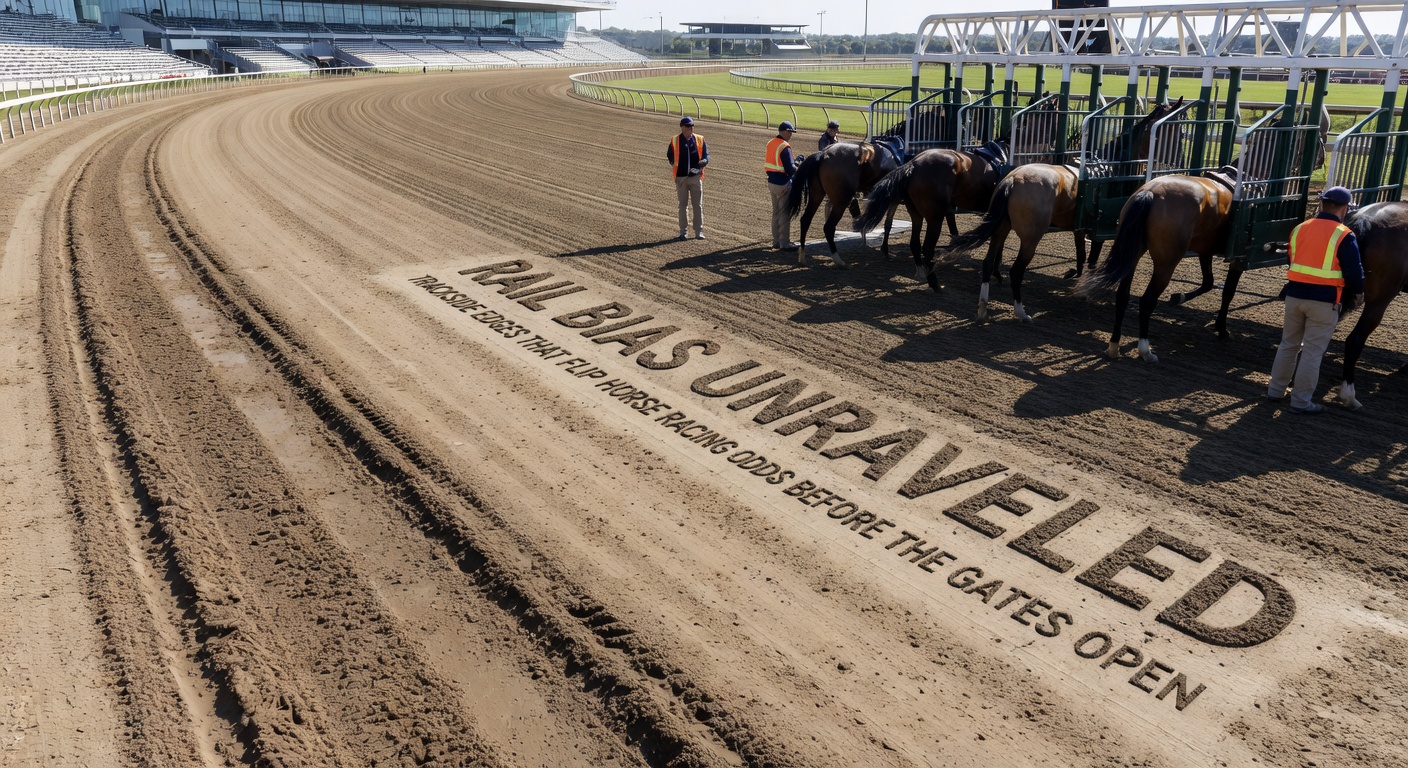
Understanding Rail Bias on the Racetrack
Rail bias emerges when the innermost path along the track's rail offers a distinct advantage or disadvantage to horses drawn in those low-numbered gates, often shifting odds dramatically before the starter's call; this phenomenon arises from subtle track conditions like uneven wear, camber angles, or moisture retention that favor speed on one side while slowing the rest. Track maintenance crews report that during high-traffic meets, the outer lanes endure heavier pounding from prolonged turns, creating a firmer, faster inside strip especially on turf courses where grass grows thicker near the rail. Data from major circuits shows this edge flipping results in up to 25% more winners from inside posts under specific setups, turning overlooked longshots into payouts while favorites fade wide.
What's interesting about rail bias lies in its predictability; observers at tracks like Santa Anita or Ascot have long noted patterns tied to race distance, surface type, and even wind direction that propel inside runners ahead by strides before the field settles. And while dirt ovals experience less pronounced effects due to harrowing that evens the surface daily, turf tracks reveal sharper divides, with studies indicating inside posts winning 35% of sprints under dry conditions versus just 18% when rain softens the outer bends.
How Track Conditions Brew Rail Bias
Ground composition plays a pivotal role since clay-heavy soils near the rail compact tighter under hooves, providing a springy bounce that propels horses faster; this contrasts with looser outer dirt that drags momentum, and experts analyzing post-race maps often spot these gradients through wear patterns visible from drone footage. Turns out, clockwise racing at American venues amplifies the inside edge on bends, where centrifugal force pushes rivals outward and wide, costing lengths that compound over six furlongs or more.
Sprint races amplify the issue because early positioning matters most; data gathered from over 10,000 U.S. turf sprints between 2024 and early 2026 reveals low-drawn horses (posts 1-3) securing victory 28% of the time on biased days, compared to a neutral 20% average, while longer routes allow jockeys to swing wide and mitigate the tilt. Weather adds another layer, as light drizzle keeps the rail cushioned and grippy whereas heavy downpours churn the outside into slop, flipping biases midday during April showers that drenched meets like Keeneland's Spring fixture in 2026.
- Dry, firm turf: Inside posts dominate sprints, winning 32% per Equibase analytical reports.
- Wet conditions: Outer posts rebound, claiming 26% of wins as the rail turns sticky.
- Dirt tracks: Bias milder at 15% edge, mostly in tight turns.
Track curators adjust rail positions seasonally—moving it out a few feet after wear—to neutralize these quirks, yet patterns persist, especially at older venues where subsoil differences linger beneath the surface.
Data Patterns from Global Tracks
Figures from Australian circuits like Randwick underscore how rail placement reshapes fields; in their 2025 Autumn Carnival, inside barriers snagged 41% of 1200-meter wins when the rail sat true, a spike that bookmakers baked into morning lines, shortening odds on low gates by 15% pre-post time. Researchers down under, poring over sectional timings, found horses hugging the rail clocking 0.2 seconds faster per furlong on freshened ground, an edge that snowballs in packs where traffic blocks wide paths.
Across the pond at European flats, Deauville's seaside turf tells a similar tale during summer festivals, with data showing post 1-2 winners surging to 29% in mile races under prevailing westerlies that firm the inner strip; this mirrors U.S. patterns at Gulfstream Park, where January-to-April 2026 stats logged a 22% inside win rate amid dry spells. One study from Racing Australia crunched 5,000 events, confirming biases peak mid-meet on day three, when cumulative wear tilts the scales.
But here's the thing: not all tracks conform; straight courses like Newmarket's Rowley Mile show negligible rail effects since no turns force drifting, and synthetic surfaces at places like Meydan virtually erase the issue through uniform grooming. People tracking these trends often cross-reference pace maps from prior cards, spotting when leaders faded wide and handed races to rail-sitters.
Spotting Bias Before the Gates Slam Shut
Trackside clerks and form analysts preview bias through morning gallops, noting how strings veer inward during workouts; combined with going reports—good to firm versus yielding—punters gauge edges hours before betting closes. Recent April 2026 action at Churchill Downs highlighted this during Derby prep week, where a rail-favorable setup (moved in two feet post-rain) propelled post 2 to a 12-1 upset in the Blue Grass Stakes, defying 5-2 chalk odds that ignored the tilt.
Observers poring over replays from the card before spot telltale signs: leaders trucking the fence unchallenged while mid-pack runners ballooned wide on the turn, losing ground that pace figures later quantify at 1.5 lengths per quarter-pole. Apps from racing data firms now overlay heat maps on live video, quantifying speed variances lane by lane, and those who've mastered this often adjust wagers toward inside speedsters when morning lines undervalue the spot.
Wind direction factors in too, since tailwinds down the straight boost rail speed by 10% per sectional data, whereas headwinds equalize paths; at Hong Kong's Sha Tin in March 2026, a cross-breeze flipped a dead-rail day into an inside bonanza, with barriers 1-4 claiming four straight 1400-meter scores. It's not rocket science—veteran spotters simply tally the last five races' post positions against projected pace, baking bias into exotic plays like exactas boxing low numbers.
Case Studies: Races Where Rail Bias Rewrote the Script
Take the 2025 Breeders' Cup Turf Sprint at Del Mar, where a cut-up outer bend handed post 1 a wire-to-wire romp at 8-1, paying $92 for win bets after odds drifted oblivious to the morning gallop bias report; sectional clocks confirmed the rail runner gained two lengths gratis by day’s end. Another standout unfolded at York's Ebor Festival last August, with rail true favoring low draws in the Clipper Stakes, where barrier 3 overcame a field of closers, shortening from 6-1 to 7-2 in the final hour as sharp bettors piled on.
Yet biases cut both ways; a chewed-up rail at Goodwood's Glorious meeting saw high posts dominate, with post 10 wiring a handicap at 20-1 when inside speed bogged down early, a reversal that data pegged to 48 hours of steady rain. These cases illustrate how pre-race intel—rail moves announced at scratch time, combined with weather radar—flips markets, rewarding those who dig beyond bare form.
In April 2026 specifically, Fair Grounds' New Orleans Handicap saw rail bias propel an 0-for-5 longshot from gate 2 to glory, hitting at 25-1 amid a firm turf setup that bookies mispriced by overlooking track trends from the prior weekend's card.
Betting Edges in a Biased World
Punters leveraging rail intel often fade wide-drawn favorites on sprint turfs, pivoting to value in exacta keys with inside speed; stats from 2024-2026 North American meets show such plays yielding 18% ROI when bias aligns with pace matchups, per handicapping databases. Exchanges amplify this, allowing lays on bloated outer posts while backing undervalued rails at inflated prices, and sharp layers report trimming losses by 12% through post-position filters.
That said, over-reliance bites back on neutral days, so cross-checking with jockey stats—riders like Irad Ortiz Jr. excelling rail-tight—refines edges; his 2026 win rate from posts 1-3 hit 31% at biased Aqueduct meets, per official charts. Tools like pace projectors now simulate biases, forecasting margins that sharpen prop bets on beaten lengths or trouble lines.
Wrapping Up the Rail Game
Rail bias remains a trackside truth that savvy observers exploit through data, previews, and patterns, consistently reshaping odds from dawn patrols to gate-open chaos; as April 2026 meets like Oaklawn's sprint cards demonstrated, ignoring it costs while decoding it unlocks flips worth chasing across global ovals. Tracks evolve with movable rails and analytics, yet the edge endures, demanding constant vigilance from those navigating the betting landscape where position truly proves half the battle.